Monday, July 16, 2012

NYC Internet Speeds and Infrastructure Map - Inequity at Play?

While doing research about smartphones and urban access I came across this great map of Internet speeds and infrastructure in NYC.


From this map it seems as though low-income neighborhoods have slower internet speeds on the megabytes per second scale and that this is related to the amount of fiber optic in areas. A possible explanation is that there are not many commercial office uses in low-income neighborhoods. However, if you consider the Lower East Side (LES) that is not exactly bustling with commercial office spaces and yet there is an abundance of fiber optic infrastructure it is hard to wonder if this is not just another example of systematic inequities at play.

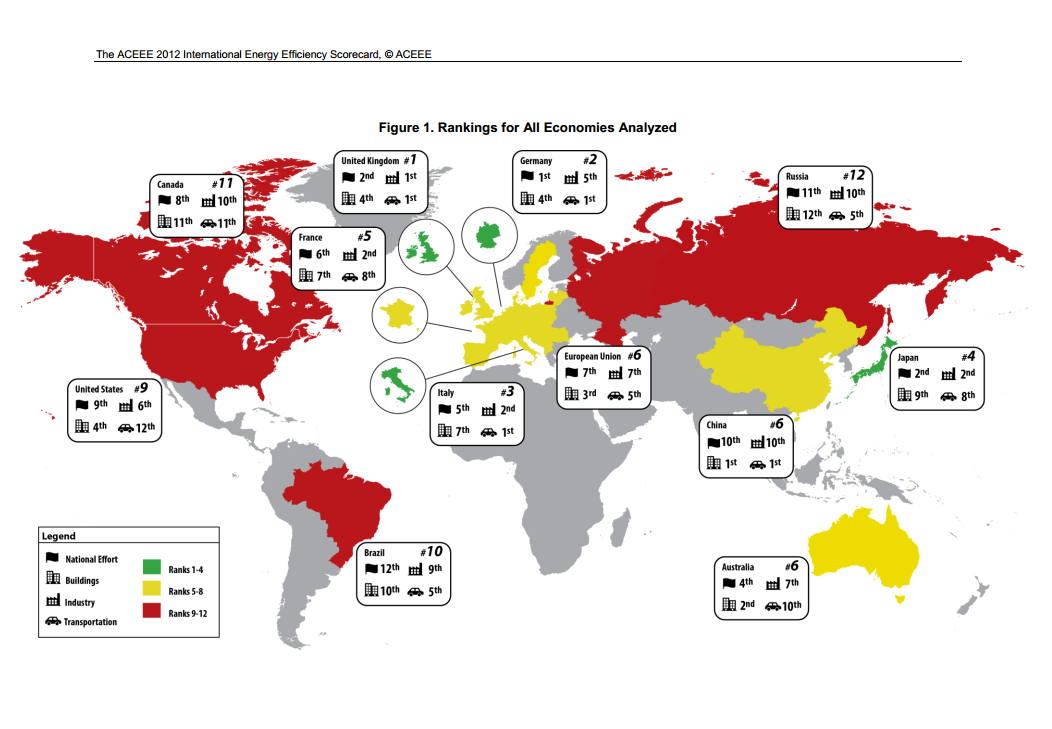
The ACEEE 2012 International Energy Efficiency Scorecard

The ACEEE created an interesting map that ranks countries on overall "energy efficiency" and across sectors.

However, in this map the energy efficiency innovating countries Norway, the Netherlands, Sweden or Spain are not necessarily ranked.

Wednesday, June 20, 2012

Great interactive data visualization of energy consumption and production by The Guardian courtesy of data from BP.


Tuesday, June 05, 2012

How do you use your iPhone, android or iPad to experience a city?

Do you have an iPhone, Android, iPad?...fill out a quick survey for research on how you use your iPhone, android or iPad to experience a city?

Wednesday, February 29, 2012

NYC Special Zoning Issue - Urban Magazine

In 2011, the 1961 New York City's Zoning Resolution turned 50.

In a special zoning issue, Columbia University's Urban Planning student run magazine, Urban, considers the question of the future of zoning in New York City and how it may evolve to tackle the pressing issues or our time.

link to Urban's special Zoning Issue

Saturday, February 25, 2012

Abraham Lincoln on the Role of Government

President Obama likes to quote President Lincoln in his speeches for High Speed Rail. One of his favorite quotes to use is the following 1854 quote:

“The legitimate object of government is to do for the people what needs to be done, but which they cannot, by individual effort, do at all, or do so well, by themselves ...Making and maintaining roads, bridges, and the like...”

Absolutely classic!

Great New York City Population Facts

In the 2010 Census New York City's had population of 8,175,133 

Putting NYC's population into context:
  • It is the most populous city in the United States, it is more than twice as populous of the 2nd largest city, Los Angeles
  • New York City has more people than 39 of the 50 US states. This one is my favorite
  • There are approximately 375,000 more women than men in NYC
  • NYC still receives a substantial number of in-migrants, but has a net loss of 1 migrant every 26.5 minutes
  • 1 in every 2 NYC households is occupied by someone living alone

Thursday, February 23, 2012

Mexico City Transit: El Metro y el Metrobus

Mexico City has the most extensive metro system in Latin America, it also has a growing Bus Rapid Transit system (Metrobus). Collectively, the public transportation network moves about 80% of the 13.5 million residents and commuters throughout the city. Below I combine the maps of both systems  to give a quick snapshot of the city's comprehensive rapid transit infrastructure. Despite the service capacity of both systems, many areas in the periphery lack access to the public transport system and must still rely on other forms of transport.


Friday, January 20, 2012

Solar Powered Parking Meters in Los Angeles, CA

At the 80th Winter Meeting of the US Conference of Mayor the City of Los Angeles receives award of excellence for its public private partnership with San Diego based, IPS Group Inc. that has upgraded traditional parking meters to solar powered parking meters. LA now has the most solar-powered parking meters in the country.

The project has amounted lots of public support and improved in parking/transportation operations. More importantly has generated millions of additional annual revenue for the city and is helping make LA more sustainable. Additionally, the new card and coin solar-powered meters will reduce the need to dispose of 40,000 AA batteries per year. 

Mayor Villaraigosa told the US Conference of Mayors that “By reusing our existing poles and using clean solar power, these new Coin and Card meters are a win-win for customers, the city, and the environment.” 

Parking an Amenity, Not a Right

My perspective on easing parking violation policies in New York City is that they should not happen. Parking is not a right, at most it is an amenity. No one likes parking tickets, but it comes with the territory and the privilege. It is the driver’s responsibility to know the conditions of the public or private parking space they use, and decide whether to leave the car or not, and to plan accordingly. Parking tickets are a part of driving, drivers need stop complaining and simply have better parking sense and practice better parking patterns. 

For more on NYC's recent parking policies: http://t.co/74KCB0AX

Thursday, January 19, 2012

A Look into Mexican Drug Lord Homes

It is fascinating that an article (a very good one at that) about Mexican drug lord homes made it into the Home & Garden section of the New York Times. The NYTimes never ceases to amaze. In his article, "Inside the Homes of Mexico's Alleged Drug Lords" Damien Cave states that for many people in Mexico "crime represents a meritocracy in a country of oligarchy and poverty. Work hard, do what it takes and a crime boss will reward you with money, cars and responsibility."

For narcos homes are a symbol of wealth and power, crime is simply the means to obtain not just a home, but in the best of aspirations homes filled with plush luxury. However, as he gets a glimpse into the psyche of Mexican drug lords as he tours government captured homes of the illicit perpetuators of "narquitecture" he discovers that "most of the homes I visited were hardly palaces. Many were entirely average and darkly utilitarian...Even on the more luxurious end of the spectrum, most of the homes could best be described as upper-middle-class. Packed into nice neighborhoods, they were usually three- to five-bedroom houses of around 3,000 square feet, lacking exterior charm or adornment. The biggest tipoffs about the occupants: a shortage of street-facing windows, and the best security systems money could buy." Evidence of family life in the homes is also found that reminds us that the security systems are not just to protect their business enterprises, but also to protect their loved ones from the potential backlashes of their profession.

Thursday, December 01, 2011

Mexico the New G-20 Chair & Other Interesting Country Specs

I'm writing a paper on Mexico City's Metrobus. I won't necessarily be able to include some of the facts I find in my study, but they are quite interesting not to share and leave them buried in the google search abyss.

One of the more interesting facts I came across is on the IMF site: "Mexico takes over as Chair of the G-20 on December 1 (Today) and will assume a major role in forming the policy agenda for the G-20 in the next 12 months." Go Mexico...Viva Mexico!

In my opinion this raises the stakes higher for the upcoming presidential election in Mexico in  July (2012). Interestingly, today (especially in the US press) there hasn't been much news about Mexico assuming this power role in world politics. Two weeks ago, the Guardian did have an article that does not support President Calderon's soon to be position. Though, Calderon does seem to be doing the most he can to get some stage time from the G20 role, there is only so much he can do to use the position to help his party, the PAN, to win the upcoming presidential election.

On a different note, the BBC doesn't take much mercy on Mexico and just puts out how they really feel on their Country Profile of Mexico. They start off with the bold heading: "Mexico is a nation where affluence, poverty, natural splendour and urban blight rub shoulders." It is hard to disagree with their statement, even though I'm sure many government officials would say that the government is trying to lessen income inequality throughout the country. However, the gap still remains and the BBC's statement holds true.

One fact that I would contest is their assessment of the country's major religion. Sure Catholicism is a derivative of Christianity, but as a Mexican-American, I still, like many in Mexico think of Mexico as a "Catholic"country not a Christian one. Just saying, small clarification.

A bigger fact and more amusing fact is one highlighted by the US State department: Mexico is 7th largest oil producer in the world and second largest supplier of oil to the US. This fact makes me laugh because earlier this year a few people asked me what is it that Mexico produces and when I said oil, they were surprised, at which point I repeated: "Yes, Mexico produces a lot of oil and the US buys a lot of it."

Monday, October 31, 2011

Wednesday, June 22, 2011

Crime Prevention in Latin American Cities

Here is a link to my newest article on This Big City about crime prevention in Latin American Cities.

An excerpt:
"As seen in Los Angeles, the traditional crime prevention structure in cities is evolving but in a way it is also going back to olden times when community vigilance was the only thing around to prevent crime. Community participation is key because some people, criminals or not, are not always comfortable talking or collaborating with law enforcement to help prevent crime but may be more amenable to listen to a community member. Moreover, as Sandra Parra Dionicio, an advisor on security reform plans from Colombia, put it, community security is a right, and it is not just about chasing after the bad guys it is also about helping the good guys." more

Thursday, June 09, 2011

Former Gang Members Changing the Discourse

This whole week the Institute of the Americas in San Diego brought together key law enforcement players from the public and non-profit sectors in Latin America for a training on Community Crime Prevention. 


Today as I sat in on panel discussion from the Los Angeles Sheriff's Department, law enforcement consultants and former gang members. I couldn't help be but moved and inspired by the stories of the two ex-gang members. They have changed their lives and are now helping bring a new sense of help and hope to their communities. 


It's amazing what desire for change and determination can do to help us push through hard times. It is my guess that at one point they had to make a decision to continue their lives as they were or choose life over violence. 


They changed their life around and as happy as I am for them I can't help but feel a bit spoiled since to date I have fortunately have not had to choose between life and death. I am grateful that my perspective has been enriched by hearing about their experiences and the great collaboration that is happening in Los Angeles between the police department and the community.

Wednesday, June 08, 2011

My Quest for a Thesis Question - Summer 2011

My quest for a thesis question for my Masters of Science in Urban Planning from Columbia University is officially in full effect.

I started reading Daniel Yergin's The Prize and learning the ins and outs of the world's obsession with Power, both typical power generation and the other kind of power that spur wars, and good old oil.

Let the Thesis Games Begin!

Tuesday, May 31, 2011

2011 UN Conflict, Security and Development Report Highlights

The UN provides 9 Chapters of Strategies and Best-Fit and Good Fit solutions for a multitude of conflict situations that in the end share similar adverse impacts to development and economic vitality in a given country.

Today’s violence occurs in repeated cycles
Recurring civil wars have become a dominant form of armed conflict in the world today. Every civil war that began since 2003 was a resumption of a previous civil war.

Development impacts of violence

Poverty reduction in countries affected by major violence is on average nearly a percentage point slower per year than in countries not affected by violence.

One reason for the persistence of low growth in conflict-affected countries may be the difficulty of reassuring investors, both domestic and foreign. A civil war reduces a country’s average rating on the International Country Risk Guide by about 7.7 points (on a 100-point scale); the effect is similar for criminal violence.  For the first three years after conflict subsides, countries have a rating 3.5 points below similar non-conflict countries.

When military spending increases and commensurately reduces investments in development and human capital.

Economic stresses
Low incomes reduce the opportunity cost of engaging in violence....Capturing this perspective, the leader of the Sudan People’s Liberation Movement, John Garang, said, “Under these circumstances the marginal cost of rebellion in the South became very small, zero, or negative; that is, in the South it pays to rebel.”

Transformation takes time
Leaders, stakeholders, and the international community must remember that societies will go through multiple cycles of confidence-building and institutional reform before they can achieve the resilience to violence necessary for “development as usual.”

Going Forward: "Peace Infrastructure”
More effective international support to risk reduction requires (1) combined tools that link citizen security, justice, jobs, and associated services, and (2) structural investments in justice and employment capacity.


Where infrastructure is constructed in violence-affected areas, care should be taken to use labor-intensive technologies and provide for local labor to avoid tensions over the benefits. In some regions, discussions about shared economic infrastructure with joint benefits could also create an opening for later political or security discussions.

To view the full report click here

Tuesday, May 24, 2011

Chicago On Climate Change

“Cities adapt or they go away,” said Aaron N. Durnbaugh, deputy commissioner of Chicago’s Department of Environment.


For more info check out NYTIMES article

Monday, April 18, 2011

2011 Pulitzer Prize Winners

Just Because I love Columbia and great writing! Here is this year's 2011 Pulitzer Prize Winners

Journalism

PUBLIC SERVICE - Los Angeles Times
INVESTIGATIVE REPORTING - Paige St. John of the Sarasota Herald-Tribune
EXPLANATORY REPORTING - Mark Johnson, Kathleen, Gallagher, Gary Porter, Lou SaldivarAlison Sherwood of the Milwaukee Journal Sentinel and
LOCAL REPORTING - Frank Main, Mark Konkol and John J. Kim of the Chicago Sun-Times
NATIONAL REPORTING - Jesse Eisinger and Jake Bernstein of ProPublica
INTERNATIONAL REPORTING - Clifford J. Levy and Ellen Barry of The New York Times
FEATURE WRITING - Amy Ellis Nutt of The Star-Ledger, Newark, N.J.
COMMENTARY - David Leonhardt of The New York Times
CRITICISM - Sebastian Smee of The Boston Globe
EDITORIAL WRITING - Joseph Rago of The Wall Street Journal
EDITORIAL CARTOONING - Mike Keefe of The Denver Post
BREAKING NEWS PHOTOGRAPHY - Carol Guzy, Nikki Kahn and Ricky Carioti of The Washington Post
FEATURE PHOTOGRAPHY - Barbara Davidson of the Los Angeles Times

Letters, Drama and Music

FICTION - "A Visit from the Goon Squad" by Jennifer Egan (Alfred A. Knopf)
DRAMA - "Clybourne Park" by Bruce Norris
HISTORY - "The Fiery Trial: Abraham Lincoln and American Slavery" by Eric Foner (W. W. Norton & Company)
BIOGRAPHY - "Washington: A Life" by Ron Chernow (The Penguin Press)
POETRY - "The Best of It: New and Selected Poems" by Kay Ryan (Grove Press)
GENERAL NONFICTION - "The Emperor of All Maladies: A Biography of Cancer" by Siddhartha Mukherjee (Scribner)
MUSIC - "Madame White Snake’" by Zhou Long, premiered on February 26, 2010 by Opera Boston at the Cutler Majestic Theatre.